Find a 2016 Honda Accord Used Engine 2.4L
A 2016 Honda Accord used engine 2.4L is a replacement gasoline engine sourced from a previously operated vehicle. It can be a cost-effective alternative to rebuilding the original engine or purchasing a remanufactured unit, provided the replacement has been properly inspected and confirmed compatible.
The 2016 Honda Accord’s standard 2.4-liter four-cylinder engine produces approximately 185 horsepower in common configurations, while the Sport sedan version produces approximately 189 horsepower. Exact specifications depend on the vehicle’s configuration. Before buying, verify the engine code, VIN compatibility, mileage, condition, warranty, and total installed cost.
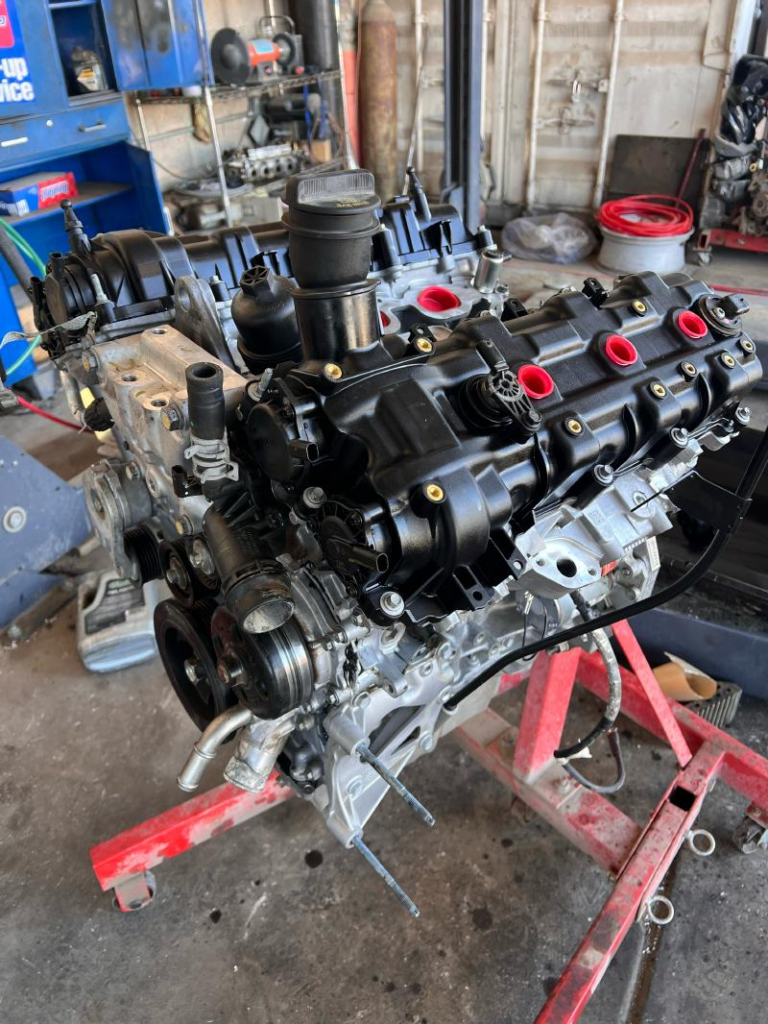
Buyers can contact used-engine suppliers, automotive recyclers, and specialist replacement-engine retailers, including Vander Engines, to ask about inventory and obtain a written quotation for their specific vehicle.
Introduction
When your Honda Accord develops a serious engine problem, finding a suitable replacement can help you get back on the road without purchasing another vehicle. The 2016 Honda Accord 2.4L engine is a practical choice for drivers who value everyday performance, fuel efficiency, and comfortable driving.
However, replacing an engine is a significant investment. The wrong engine configuration, an undocumented maintenance history, or restrictive warranty terms can turn an apparently affordable purchase into an expensive repair.
This guide explains the specifications of the 2016 Honda Accord 2.4L engine, the benefits of purchasing a used replacement, the factors that influence pricing, and the questions to ask before ordering. It also covers installation, warranty considerations, and frequently asked questions to help you make an informed decision.
What Are the Specifications of the 2016 Honda Accord 2.4L Engine?
The 2016 Honda Accord was available with both a 2.4-liter inline-four gasoline engine and a 3.5-liter V6 gasoline engine, depending on trim level and configuration. The 2.4L engine was designed to balance responsive performance with everyday fuel economy.
According to Honda’s official 2016 Accord powertrain information, the standard 2.4L engine produces 185 horsepower and 181 lb-ft of torque. The Sport sedan configuration produces 189 horsepower and 182 lb-ft of torque. Read Honda’s official powertrain specifications.
Key Engine Specifications
| Specification | 2016 Honda Accord 2.4L |
|---|---|
| Engine displacement | 2,356 cc |
| Engine configuration | Inline four-cylinder |
| Fuel type | Gasoline |
| Valve system | DOHC i-VTEC, 16 valves |
| Fuel injection | Direct injection |
| Standard horsepower | 185 hp |
| Standard torque | 181 lb-ft |
| Sport sedan horsepower | 189 hp |
| Sport sedan torque | 182 lb-ft |
| Transmission options | Configuration-dependent CVT or six-speed manual |
These specifications describe common North American configurations. Always confirm the original engine code and vehicle configuration before purchasing a replacement.
Why Buy a Used 2016 Honda Accord 2.4L Engine?
A used engine can be a practical solution when the original engine has suffered severe mechanical damage and the rest of the vehicle remains in good condition.
1. Lower Upfront Replacement Cost
A used engine generally has a lower initial purchase price than a new engine and may cost less than a remanufactured alternative. This can make it attractive to owners who want to control repair expenses.
However, compare the complete cost rather than the engine price alone. Shipping, installation, fluids, filters, seals, and any additional parts can significantly affect the final amount.
2. Extend the Life of Your Vehicle
If your 2016 Honda Accord has a healthy transmission, sound suspension, and a structurally solid body, replacing the engine may allow you to continue using a vehicle you already know.
A properly matched replacement engine, combined with professional installation and appropriate maintenance, can help restore the vehicle’s usefulness.
3. Potentially Shorter Replacement Time
Used-engine suppliers and automotive recyclers may have compatible engines available in their existing inventory. When the correct unit is in stock, sourcing it may be faster than arranging a specialized rebuild.
Ask the supplier to confirm actual inventory, preparation time, and estimated delivery dates before making payment.
4. More Replacement Options
Used engines are available in different mileage ranges and condition categories. This gives buyers an opportunity to compare price, documented history, testing, and warranty coverage.
The best option is not necessarily the engine with the lowest mileage or lowest advertised price. It is the unit with the strongest available evidence of condition and the most suitable terms for your budget.
What Causes a 2016 Honda Accord Engine to Need Replacement?
An engine replacement may be necessary when internal damage is extensive or rebuilding is no longer economical. Common warning signs include excessive oil consumption, persistent knocking, repeated overheating, and low cylinder compression.
These symptoms do not automatically mean the entire engine must be replaced. A qualified technician should diagnose the underlying problem first.
- Excessive oil consumption: Worn internal components, oil leaks, or other mechanical issues may cause oil loss.
- Engine knocking: Persistent metallic noises can indicate internal wear or lubrication problems.
- Overheating: Repeated overheating may damage the cylinder head, head gasket, or other engine components.
- Low compression: Damaged valves, piston rings, or cylinders may prevent the engine from operating efficiently.
- Severe internal damage: Major mechanical failure may make replacement more economical than rebuilding.
If the oil-pressure warning light comes on or the engine develops severe knocking, stop driving when it is safe to do so and arrange a professional inspection.
How to Choose the Right Used Honda Accord Engine
Choosing the correct replacement engine is one of the most important steps in the buying process. A 2.4L engine advertised for a 2016 Accord is not automatically compatible with every trim or vehicle configuration.
Verify VIN and Engine Code Compatibility
Provide your vehicle identification number (VIN) to the supplier or a qualified parts specialist. Ask them to confirm the replacement engine code and compatibility with the original vehicle.
Engine codes, wiring, sensors, emissions equipment, and related components may vary by configuration. Do not rely on model year and engine displacement alone.
Check Mileage and Maintenance History
Ask for the donor vehicle’s recorded mileage, available maintenance history, and reason for dismantling. Documented information provides a better basis for evaluating a used engine than an unsupported mileage claim.
Remember that mileage is only one indicator of condition. Previous overheating, inadequate lubrication, or poor maintenance may affect an engine regardless of its reported mileage.
Request Inspection and Testing Details
Before ordering, ask whether the engine has undergone a visual inspection, compression testing, leak-down testing, or other appropriate checks.
Request photographs of the actual engine, not just stock images. Ask about visible damage, oil or coolant contamination, and any known mechanical issues.
If testing has not been completed, ask the supplier to explain the limitations and what protection is available if the engine proves defective.
Confirm Included Components
Used engines may be supplied as long blocks or more complete assemblies. Included components vary by seller.
Confirm whether accessories, sensors, intake components, fuel-system components, and wiring are included or sold separately. Establish which parts will be transferred from your original engine and which must be purchased separately.
How Much Does a 2016 Honda Accord Used Engine 2.4L Cost?
The cost of a used 2016 Honda Accord 2.4L engine depends on mileage, mechanical condition, testing, availability, warranty coverage, and shipping distance.
Because inventory and market prices change, buyers should obtain current quotations for the exact replacement engine rather than relying on a general online estimate.
When comparing prices, consider:
- Engine purchase price.
- Shipping and delivery fees.
- Applicable taxes and import charges.
- Installation labor.
- Fluids, filters, seals, and other service items.
- Additional components required for compatibility.
- Warranty limitations and potential return-shipping costs.
A lower advertised price may not represent the best overall value if the engine has limited documentation or the warranty excludes important expenses.
Request an itemized quotation and compare the total installed cost before deciding.
Where to Buy a 2016 Honda Accord 2.4L Replacement Engine
Potential sources include automotive salvage yards, established used-engine suppliers, vehicle recyclers, and specialist replacement-engine retailers.
Vander Engines is one supplier you can contact to inquire about engine availability and request a quotation. Before placing an order, independently verify the specific unit’s compatibility, mileage, condition, warranty, and delivery terms.
When evaluating any supplier, look for:
- Clear business and contact information.
- Accurate inventory descriptions.
- Written warranty and return policies.
- Documentation of the engine’s condition and mileage.
- Transparent shipping costs and estimated delivery dates.
- A clear process for handling defective or incorrectly supplied parts.
Review independent customer feedback and investigate unresolved complaints before making a purchase. A seller’s website or product listing alone is not proof of engine quality.
What If You Are Buying From Outside the United States?
For international buyers, including customers in India, the United Kingdom, or other markets, additional checks may be necessary.
Confirm whether the seller ships to your destination, whether the engine can legally be imported, and which party is responsible for customs clearance, duties, and local delivery. Also verify local vehicle-registration, emissions, and engine-replacement requirements before importing the engine.
Ask for the final delivered price in writing and confirm the procedure for reporting shipping damage or requesting a return. International returns can be expensive, so these details should be resolved before payment.
Used vs. Rebuilt vs. Remanufactured Engine
The best replacement depends on your budget, vehicle condition, and expectations for warranty coverage.
| Replacement type | Main advantage | Important consideration |
|---|---|---|
| Used engine | Often a lower upfront cost | History and remaining service life may be uncertain |
| Rebuilt engine | Original or replacement components repaired as needed | The scope and quality of rebuilding vary |
| Remanufactured engine | Typically undergoes a more extensive, defined rebuilding process | Higher purchase price may apply |
A used engine can be a sensible choice when its condition is adequately documented and its price reflects the remaining uncertainty. A rebuilt or remanufactured engine may be preferable when more extensive internal inspection and component replacement are priorities.
Compare the actual work performed, testing procedures, warranty coverage, and installed cost instead of choosing based solely on the product label.
Installation and Maintenance Tips
Correct installation is essential to the performance and durability of a replacement engine.
First, identify why the original engine failed. If the cause was a cooling-system fault or lubrication problem, leaving it unresolved could damage the replacement engine as well.
Next, have the technician inspect the cooling system, engine mounts, electrical connections, and related components. Replace seals, gaskets, filters, and other wear items as appropriate to the engine’s condition and the manufacturer’s service guidance.
Use fluids that meet the vehicle’s specifications. Ensure that the cooling system is filled and bled correctly, and check for oil, coolant, and fuel leaks.
After installation, the technician should verify oil pressure, coolant temperature, charging operation, and engine-management performance. Scan for diagnostic trouble codes and perform an appropriate road test before returning the vehicle to regular service.
Keep installation invoices and service records. These documents may also be necessary if a warranty claim arises.
What Warranty Should You Expect With a Used Engine?
Warranty coverage varies between suppliers, so always request the complete written terms before paying.
Check the warranty duration, mileage limits, covered internal components, installation requirements, and exclusions. Determine whether labor is covered if the engine fails and whether the supplier requires authorization before repairs or returns.
Also ask who pays return shipping and whether the remedy is a replacement engine, repair, or refund.
Do not assume a parts warranty covers removal and reinstallation costs. Keep the invoice, engine identification information, installation records, and all communications with the seller.
Frequently Asked Questions About the 2016 Honda Accord Used Engine 2.4L
1. How much horsepower does the 2016 Honda Accord 2.4L engine produce?
The standard North American 2.4L engine produces 185 horsepower and 181 lb-ft of torque. The Accord Sport sedan version produces 189 horsepower and 182 lb-ft of torque. Confirm your vehicle’s exact configuration before ordering a replacement.
2. Is a used 2016 Honda Accord 2.4L engine worth buying?
Yes, it can be worth considering if the engine is compatible, adequately inspected, reasonably priced, and backed by suitable written warranty terms. Compare its total installed cost with rebuilding or replacing the vehicle.
3. How do I know if a used Honda Accord engine will fit my car?
Provide your VIN and original engine code to the supplier. Confirm the engine configuration, transmission compatibility, electrical connections, and emissions-related equipment before purchase.
4. How much does a used 2016 Honda Accord 2.4L engine cost?
Prices vary by mileage, condition, testing, warranty, availability, and shipping. Request a current, itemized quotation that includes delivery and clarify whether installation components are included.
5. How many miles can a used Honda Accord engine last?
There is no guaranteed remaining lifespan for a used engine. Its future service life depends on maintenance history, previous operating conditions, current mechanical condition, installation quality, and ongoing maintenance.
6. Does the 2016 Honda Accord use the same engine in every trim?
No. The 2016 Accord was available with both 2.4L four-cylinder and 3.5L V6 engines, depending on trim and configuration. Some 2.4L versions also have different performance specifications. Verify the exact engine code before ordering.
7. What should I check before buying a used engine online?
Confirm the engine code, VIN compatibility, documented mileage, inspection results, included components, shipping cost, warranty coverage, and return process. Request photographs of the actual engine and written confirmation of the seller’s terms.
8. Can a used engine be shipped internationally?
International shipping depends on the seller’s service area and applicable import regulations. Before paying, confirm shipping availability, customs duties, documentation requirements, local installation compatibility, and responsibility for returns or shipping damage.
9. Is a used engine better than a remanufactured engine?
Neither option is automatically better. A used engine may have a lower initial price, while a remanufactured engine typically undergoes more extensive rebuilding. Compare documented condition, rebuilding standards, warranty terms, and total installed cost.
10. Where can I inquire about a 2016 Honda Accord 2.4L replacement engine?
You can contact automotive recyclers and specialist engine suppliers, including Vander Engines, to ask about availability. Verify the specific engine, written quotation, warranty, and shipping arrangements before purchasing.
Conclusion
A 2016 Honda Accord used engine 2.4L can be a cost-effective replacement for owners who want to restore their vehicle without purchasing another car. The right engine should match the vehicle’s original configuration, have a clearly documented condition, and come with transparent warranty and delivery terms.
Before placing an order, verify compatibility using the VIN and engine code, review the available inspection information, and compare the total installed cost with other repair options. Professional installation and appropriate maintenance are equally important to the success of the replacement.
If you are considering Vander Engines or another replacement-engine supplier, request a detailed quotation and written confirmation of the specific engine’s condition and coverage.
Ready to find a replacement? Visit Vander Engines to inquire about availability for your 2016 Honda Accord 2.4L and confirm compatibility before ordering.