Need to Know About Buying a Used V8 Engine
For car enthusiasts, restorers, and performance-minded drivers, a V8 engine represents the ultimate combination of power, torque, and classic driving experience. If your vehicle’s engine has failed or you’re planning an upgrade, a used V8 engine can be a cost-effective solution. But buying a used engine is not as simple as picking one off a shelf. From verifying mileage to ensuring compatibility, every detail matters. In this guide, we’ll cover everything you need to know about buying a used V8 engine, including tips for inspecting engines, choosing the right model, and why USA AUTO PARTS LLC could be a potential supplier for your next V8 swap.
Why Consider a Used V8 Engine?
There are several reasons why buying a used V8 engine can make sense:
1. Cost Savings
A brand-new V8 engine can cost anywhere from $5,000 to over $10,000, depending on the manufacturer and specifications. Used V8 engines are typically 30–70% cheaper than new engines, offering major savings for budget-conscious enthusiasts.
2. Availability of Rare or Classic Engines
Certain engines, especially from classic cars or specific performance models, are no longer in production. A used engine may be your only option to restore a vintage muscle car or to achieve a specific performance build.
3. Quick Turnaround
Rebuilding a damaged engine takes time and labor. Buying a used V8 can drastically reduce downtime, allowing your vehicle to be back on the road faster.
4. Environmental Benefits
Reusing engines reduces waste and supports sustainable practices in the automotive industry. Salvaging engines from retired or damaged vehicles helps keep functional components out of landfills.
Understanding the Risks
While there are many benefits to buying a used V8 engine, there are risks you should understand:
-
Hidden Damage: Previous owners may not disclose overheating, flooding, or mechanical issues.
-
High Mileage: Some used engines may have accumulated more miles than advertised.
-
Warranty Limitations: Used engines often come with limited or short-term warranties.
-
Installation Complexity: Older engines may require additional parts or modifications to fit newer vehicles.
Awareness of these risks is crucial. A little due diligence can save you thousands in repairs or future replacements.
Types of Used V8 Engines Available
When shopping for a used V8 engine, it’s important to understand the different types you may encounter:
1. Salvage Engines
Salvage engines are removed from vehicles that were involved in accidents or retired for other reasons. These engines are sold as-is, often without extensive inspection or warranty.
Pros: Lowest price, readily available.
Cons: Unknown wear, higher risk of hidden damage.
2. Rebuilt Engines
Rebuilt engines have been disassembled, cleaned, and had key components replaced, such as bearings, pistons, or gaskets. They may include some warranty, depending on the seller.
Pros: Improved reliability over salvage engines.
Cons: Quality depends on the skill of the rebuilder.
3. Remanufactured Engines
Remanufactured engines are restored to near-new specifications. All critical components are inspected, worn parts replaced, and the engine is tested for proper performance.
Pros: Highest reliability, closer to “new” condition.
Cons:** Most expensive option for used engines.
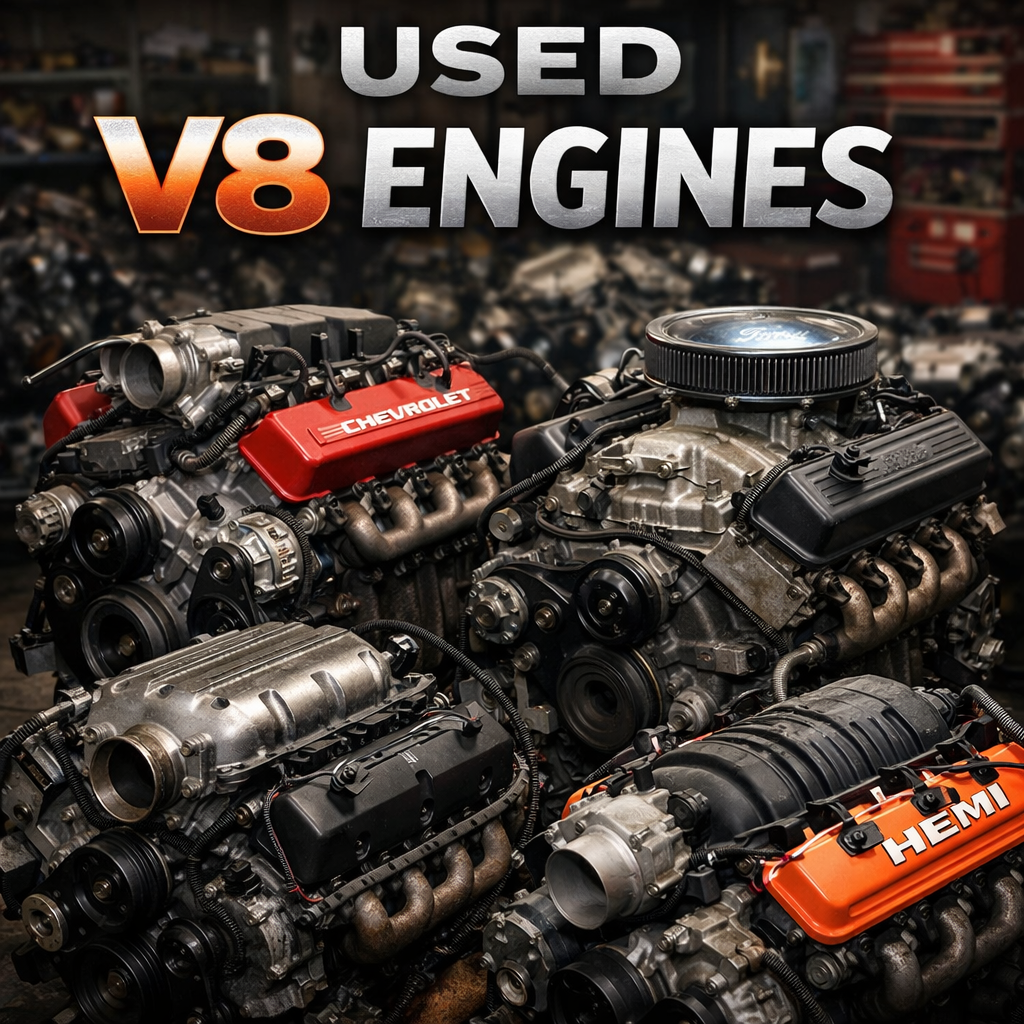
Popular Used V8 Engines
Some V8 engines are particularly popular in the used market due to performance, reliability, or historical significance:
Chevrolet Small Block (5.7L)
-
Widely used in muscle cars like the Chevelle, Camaro, and Corvette.
-
Known for strong aftermarket support and upgrade potential.
GM LS Series
-
Popular for engine swaps due to compact size, power, and aftermarket availability.
-
LS engines can produce high horsepower reliably and are versatile for performance builds.
Ford 5.0L Coyote
-
Modern, reliable V8 used in the Mustang GT.
-
High output with good fuel efficiency for a V8.
Dodge HEMI (5.7L, 6.4L)
-
High-torque engines commonly used in trucks and performance cars.
-
Excellent durability and strong aftermarket performance options.
How to Choose the Right Used V8 Engine
When buying a used V8 engine, consider the following factors carefully:
1. Vehicle Compatibility
-
Match engine codes, transmission compatibility, and drivetrain type (RWD, AWD, FWD).
-
Verify that the engine meets local emissions standards if required.
2. Mileage and Usage History
-
Lower mileage engines usually have longer lifespans.
-
Check for maintenance history if possible — frequent oil changes and proper care extend engine life.
3. Visual Inspection
-
Look for signs of leaks, corrosion, or damage.
-
Inspect the oil for sludge or metal shavings.
-
Check the condition of the timing components, belts, and pulleys.
4. Mechanical Testing
-
Request a compression test or leak-down test.
-
Compression should be even across all cylinders, and leak-down results should indicate minimal pressure loss.
5. Warranty and Return Policy
-
A reliable supplier like Vander Engines may offer a limited warranty.
-
At minimum, expect 30–90 days; longer warranties offer better protection.
Tips for Buying Used V8 Engines
Ask the Right Questions
-
What vehicle did the engine come from?
-
Was it running before removal?
-
Can I see mileage and inspection reports?
-
What is the warranty and return policy?
Payment and Shipping
-
Use a credit card for protection against fraud.
-
Confirm shipping insurance for damage during transit.
Installation Considerations
-
Replace wear items like gaskets, seals, timing belts/chains, and water pumps.
-
Consider having a professional mechanic handle installation to avoid costly mistakes.
Why Consider USA AUTO PARTS LLC
USA AUTO PARTS LLC is a company that specializes in used engines and transmissions, including a variety of V8 engines. Some benefits of working with them:
-
Competitive Pricing – Offers lower prices than remanufactured or new engines.
-
Inventory Variety – Includes engines for multiple makes and models.
-
Customer Support – Some buyers report helpful communication when confirming engine details.
However, it’s important to note that online reviews are mixed, so always confirm engine details, warranty terms, and shipping policies before committing.
How to Avoid Common Mistakes
-
Don’t Buy Based on Price Alone – Extremely cheap engines may have hidden damage.
-
Verify VIN and Engine Codes – Prevents compatibility issues.
-
Check Engine History – Avoid flood-damaged or overheated engines.
-
Understand Warranty Limitations – Short-term warranties may not cover internal failures.
-
Plan for Installation Costs – Labor can add $1,000–$3,000 depending on complexity.
Maintaining Your Used V8 Engine
Even after a successful purchase, proper maintenance is key to engine longevity:
-
Oil Changes – Stick to recommended intervals.
-
Cooling System – Ensure radiator and hoses are in good condition.
-
Fuel System – Use quality fuel to prevent deposits.
-
Drive Smoothly for the First 500–1,000 Miles – Allows parts to seat properly after installation.
FAQ : About Used V8 Engines
1. What is a used V8 engine?
A used V8 engine is a pre-owned eight-cylinder engine that has been removed from a vehicle and sold for reuse. These engines may be pulled from salvage vehicles, fleet vehicles, or previously owned cars. Some are sold as-is, while others are rebuilt or remanufactured for improved reliability.
2. Are used V8 engines reliable?
Used V8 engines can be reliable if they are carefully inspected and tested. Engines with lower mileage, a documented maintenance history, and no history of overheating or flooding typically last many more miles. Rebuilt or remanufactured engines provide additional reliability compared to engines sold “as-is.”
3. How much does a used V8 engine cost?
Prices vary depending on engine type, condition, and supplier. Typical ranges are:
-
Salvage V8 engines: $800 – $3,000
-
Rebuilt V8 engines: $2,000 – $4,500
-
Remanufactured V8 engines: $3,500 – $7,000+
Labor for installation can add $1,000–$3,000 depending on complexity.
4. What should I look for when buying a used V8 engine?
Key factors include:
-
Compatibility with your vehicle (engine code, transmission, VIN match)
-
Mileage and wear history
-
Oil and fluid condition
-
Compression or leak-down test results
-
Warranty and return policy
5. Can I buy a used V8 engine online?
Yes, many suppliers, including Vander Engines, sell used V8 engines online. However, you must verify the engine’s condition, warranty, and shipping options before purchase. Paying with a credit card is recommended for protection.
6. What are common types of used V8 engines?
Popular used V8 engines include:
-
Chevrolet Small Block (5.7L) – classic muscle car engine
-
GM LS Series – versatile and powerful
-
Ford 5.0L Coyote – modern performance engine
-
Dodge HEMI (5.7L, 6.4L) – high torque and durability
7. What is the difference between salvage, rebuilt, and remanufactured engines?
-
Salvage: Sold as-is, removed from a vehicle, cheapest option.
-
Rebuilt: Disassembled and worn parts replaced; more reliable than salvage.
-
Remanufactured: Fully restored to factory specifications with all wear parts replaced; highest reliability and cost.
8. Do used V8 engines come with warranties?
Some suppliers, like Vander Engines, offer limited warranties. A minimum 30–90 day warranty is common, but some engines may have longer coverage. Always read the warranty terms carefully, including what is covered and any labor limitations.
9. How can I tell if a used V8 engine is in good condition?
-
Even compression across all cylinders (150–200 psi typical)
-
No metal shavings or sludge in oil
-
No signs of leaks or overheating
-
Verified mileage and service history
-
Documentation of mechanical testing (compression or leak-down tests)
10. Is installing a used V8 engine difficult?
Installation can be complex, especially for modern engines or high-performance swaps. It’s recommended to have a professional mechanic handle installation and replace wear items such as:
-
Gaskets and seals
-
Timing belt or chain
-
Water pump
-
Spark plugs
-
Motor mounts
11. How long will a used V8 engine last?
Lifespan depends on prior maintenance, mileage, and engine design. On average, a well-maintained used V8 can provide 40,000–100,000 additional miles. Rebuilt or remanufactured engines may last even longer.
12. Why choose Vander Engines for a used V8 engine?
Vander Engines offers:
-
A variety of used V8 engines for different vehicles
-
Competitive pricing
-
Some warranty options
-
Assistance with engine specifications and shipping
However, it’s important to verify engine details and warranty terms before purchasing due to mixed customer reviews online.
Final Thoughts
Buying a used V8 engine can be a smart and cost-effective way to restore or upgrade your vehicle. Whether you are a muscle car enthusiast, a truck owner, or a performance hobbyist, careful selection, inspection, and installation are key to a successful purchase. USA AUTO PARTS LLC provides a range of used V8 engines, but due diligence is critical.
By understanding engine types, verifying compatibility, checking mileage, and asking for warranties, you can enjoy the raw power and performance that only a V8 engine can deliver — without costly surprises.