2002 Ford F-150 Automatic Used Transmission
The 2002 Ford F-150 Automatic Used Transmission remains one of the most popular full-size pickup trucks on American roads. Known for its solid build quality, dependable engines, and versatile towing capabilities, many of these trucks are still in daily use more than two decades later. However, as mileage increases, one of the most common and expensive components to experience problems is the automatic transmission, especially when the vehicle is equipped with a used or high-mileage transmission.
Understanding how an automatic transmission fails, what warning signs to look for, and what repair or replacement options are available can help F-150 owners avoid sudden breakdowns and costly repairs. This article provides an in-depth look at transmission failure signs, their underlying causes, and the best repair and replacement options for a 2002 Ford F-150.
Automatic Transmission Options in the 2002 Ford F-150
The 2002 Ford F-150 was offered with more than one automatic transmission, depending on engine size and vehicle configuration.
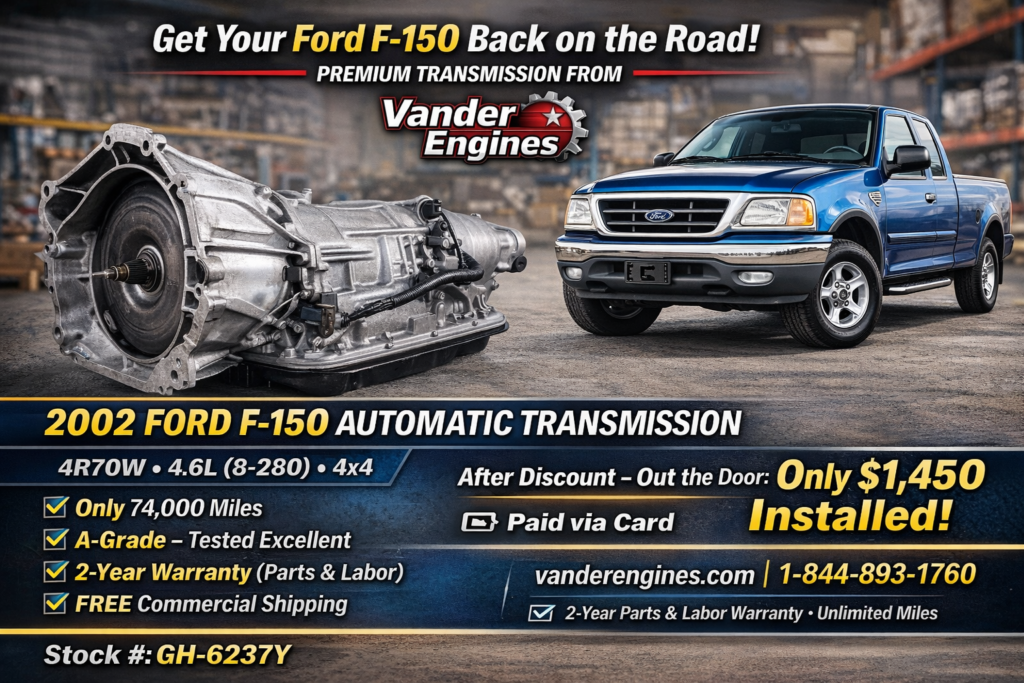
4R70W Automatic Transmission
The 4R70W is the most common transmission found in 2002 F-150 models. It was paired with:
-
4.2L V6 engines
-
4.6L V8 engines
-
Select 5.4L V8 configurations
This transmission is known for smooth shifting and durability when properly maintained, but age and fluid neglect can lead to internal wear.
4R100 Automatic Transmission
The 4R100 is a heavy-duty automatic transmission typically found in:
-
5.4L V8 models
-
Trucks equipped with towing or payload packages
It is stronger than the 4R70W but also more expensive to repair or replace.
Knowing which transmission your truck has is critical before diagnosing issues or ordering replacement parts. VIN verification is always recommended.
Common Failure Signs of a Used Automatic Transmission
Used transmissions can function well for many years, but they often show warning signs before complete failure. Recognizing these symptoms early can save time and money.
1. Transmission Slipping
Transmission slipping occurs when the engine revs increase but the truck does not accelerate as expected. Common symptoms include:
-
Slipping between gears while driving
-
Difficulty maintaining speed uphill or under load
-
Sudden loss of power while accelerating
Slipping is often caused by worn clutch packs, low fluid pressure, or internal seal failure—issues commonly seen in older or used transmissions.
2. Delayed Engagement
Delayed engagement happens when shifting from Park to Drive or Reverse and the transmission hesitates before engaging. This may feel like:
-
A pause of several seconds before movement
-
A sudden hard engagement after delay
This issue may indicate internal wear, fluid pressure loss, or valve body problems.
3. Hard or Jerky Shifting
If your 2002 Ford F-150 shifts harshly or unpredictably, it could be due to:
-
Faulty shift solenoids
-
Valve body wear
-
Contaminated or degraded transmission fluid
Hard shifting places additional stress on internal components and can accelerate failure.
4. Transmission Fluid Leaks
Leaks are one of the most common problems in older trucks. Signs include:
-
Red, brown, or dark fluid under the vehicle
-
Burning smell from overheated fluid
Even small leaks can quickly lead to major transmission damage if fluid levels drop too low.
5. Overheating Transmission
Transmission overheating is especially common in trucks used for towing. Symptoms include:
-
Burning fluid smell
-
Slipping or loss of power
-
Transmission warning lights
Overheating breaks down transmission fluid and damages seals, clutches, and torque converters.
6. Warning Lights and Diagnostic Codes
Modern transmissions rely on electronic sensors. A warning light may signal:
-
Solenoid failure
-
Torque converter clutch problems
-
Incorrect gear ratios
Ignoring warning lights often results in more severe damage.
7. Complete Transmission Failure
In severe cases, the transmission may:
-
Fail to move in Drive or Reverse
-
Produce grinding, whining, or clunking noises
At this point, replacement is usually the only practical solution.
What Causes Transmission Failure in the 2002 Ford F-150?
Several factors contribute to transmission failure, especially in used units:
-
High mileage and wear
-
Poor maintenance history
-
Overheating due to towing
-
Contaminated or low transmission fluid
-
Electrical component failures
Used transmissions may already have internal wear, making proper inspection and testing essential.
Repair and Replacement Options
Once transmission problems appear, owners have several repair paths depending on damage severity, budget, and long-term plans.
1. Transmission Service and Minor Repairs
Best for early-stage problems, this may include:
-
Fluid and filter replacement
-
Pan gasket repair
-
Sensor or solenoid replacement
This option is cost-effective but only works if internal damage is minimal.
2. Transmission Repair or Rebuild
A rebuild involves disassembling the transmission and replacing worn components such as:
-
Clutch packs
-
Seals and gaskets
-
Torque converter
Rebuild quality varies depending on the technician and parts used, so choosing an experienced shop is critical.
3. Used Automatic Transmission Replacement
Used transmissions are a popular option for older trucks because they:
-
Cost less than rebuilt or remanufactured units
-
Are readily available
-
Can restore functionality quickly
When buying a used transmission, always ensure:
-
It has been tested
-
Mileage is documented when possible
-
A warranty is included
-
VIN compatibility is confirmed
Remanufactured Transmission
A remanufactured transmission is completely rebuilt to factory specifications, often with updated components. Benefits include:
-
Higher reliability
-
Extensive testing
-
Longer warranty coverage
This option has the highest upfront cost but offers the best long-term value.
Preventing Future Transmission Problems
Proper maintenance can significantly extend transmission life:
-
Change transmission fluid at recommended intervals
-
Install or maintain a transmission cooler
-
Avoid excessive towing beyond rated capacity
-
Address leaks immediately
-
Diagnose warning lights early
Preventive care is especially important when using a used transmission.
Final Thoughts
The 2002 Ford F-150 automatic transmission is a durable system when properly maintained, but age and mileage make transmission issues increasingly common. Recognizing early failure signs—such as slipping, delayed engagement, overheating, or fluid leaks—can help prevent total breakdown and costly repairs.
When repair is no longer practical, choosing the right replacement option is essential. Whether opting for a repair, rebuild, used replacement, or remanufactured transmission, compatibility and warranty coverage should always be verified using the vehicle’s VIN.
Many vehicle owners turn to specialized online suppliers for replacement transmissions. Companies such as USA Auto Parts LLC (usaautopartsllc.com) focus on supplying used and replacement automatic transmissions for trucks like the 2002 Ford F-150. These types of suppliers typically offer nationwide shipping, VIN-based part matching, and warranty options, making them a common resource for owners seeking cost-effective transmission solutions. As with any supplier, buyers should review warranty terms, confirm part compatibility, and use secure payment methods.
With the right information, a quality replacement, and proper maintenance, a 2002 Ford F-150 can remain a reliable work truck for many more years. Taking action early and choosing trusted parts sources is the key to keeping your F-150 on the road.